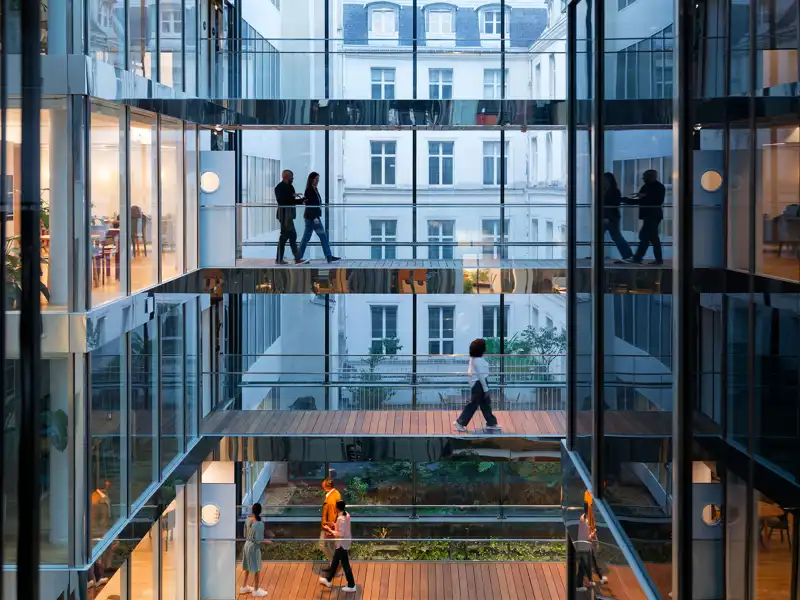
HR leaders are used to pressure, but in 2026 the pace and complexity of today’s challenges are fundamentally different.
- Expectations around wellbeing will continue to rise.
- Total rewards will become an engine for clarity, consistency and trust.
- Artificial intelligence will (and is) reshaping how work gets done.
- Employers and employees are shifting to a skills-based work paradigm.
- Compliance obligations are expanding across jurisdictions.
These forces are not operating independently. Together, they are redefining what effective HR leadership requires, often before organizations feel fully prepared. While no one can predict every challenge the year ahead will bring, clear patterns are beginning to emerge.
These HR trends reflect broader shifts in human resources management, HR technology and workforce strategy. In fact, they are shaping how organizations lead and shape their people.
Below are five HR trends shaping the road in 2026. They are not predictions or prescriptions, but the signals HR leaders should be paying attention to as they assess their team’s readiness for what lies ahead.
Trend 1: Wellbeing Becomes Organizational Infrastructure
For years, wellbeing has been treated as a collection of programs: an EAP here, a wellness initiative there, some new benefit added in response to a novel need. In 2026, that framework falls short.
In its stead, a structural shift is emerging. Wellbeing is increasingly functioning as organizational infrastructure. It influences how work is designed, how managers lead, how sustainable roles feel over time and how resilient teams are under pressure. When wellbeing falters, the effects show up across the board in performance, retention and leadership effectiveness.
This shift reflects a growing recognition that stress and burnout are rarely individual failures.
More often, they are the signals of systemic strain. When priorities are unclear and workloads become unsustainable, pressure builds across the organization.
To prevent that pressure from reaching a breaking point, wellbeing must go beyond isolated programs to address how work itself is structured and supported.
This should include the sustainability of HR and people leaders themselves. The scope of HR continues to expand — spanning workforce governance, leave and accommodation complexity, manager enablement and the ethical oversight of new technologies. As HR takes on new roles, capacity, focus and support for those roles are a critical part of the wellbeing equation.
Trend 2: Total Rewards Move from Expansion to Intentional Design
Over the past several years, many employers expanded their benefits and rewards offerings in rapid response to changing employee needs. In 2026, the challenge has less to do with offering more, and more to do with ensuring that what’s offered is coherent, understandable and aligned with how people actually work and live.
Total rewards strategies are shifting from expansion to intentional, connected design.
Fragmentation across benefits, compensation, wellbeing and leave can create confusion, decision fatigue and uneven experiences, even when investments are significant. Employees may have access to more resources than ever yet still lack a clear understanding of the value they’re offered or how to use what’s available.
This places emphasis squarely on alignment, communication and clarity. HR leaders should think about whether their total rewards strategy reflects deliberate choices that support both employee needs and organizational priorities. If they don’t, even the most well-intentioned efforts can fall short of expectations.
Trend 3: As AI Scales, HR Must Take On Governance
Artificial intelligence is out of the box and in daily use. As it spreads across functions, roles and workflows, HR must keep pace with governance. AI use cannot be underestimated and should be treated as one of the most significant HR technology trends shaping how decisions are made, governed and experienced in the workplace.
Employees need clarity about how AI affects their work. Managers need guidance on leading teams where human judgment and automated systems intersect. Organizations, in turn, need guardrails to ensure ethical use, consistency and trust.
For HR, this means stepping into a stewardship role that balances innovation with oversight. AI is advancing faster than many policies, training models, or role definitions can keep up. Navigating this shift requires treating AI not just as a productivity tool, but as a decision-making system that reshapes work design, accountability and workforce readiness.
Consider decisions that affect pay, promotion or workload. When AI is involved, HR plays a central role in defining where automation is appropriate, where human judgment is required and how accountability is maintained across the organization.
Trend 4: The Skills-Based Workforce
The skills-based perspective is gaining steam. As technology, automation and new ways of working reshape jobs, traditional role-based workforce planning is no longer the sole lens through which organizations staff and develop talent.
In 2026, skills are increasingly becoming the unit of workforce planning, connecting talent development with internal mobility and long-term resilience.
This shift allows organizations to respond flexibly to change while giving employees visibility into how they can grow within the organization.
Skills-based approaches essentially connect business needs and employee development. People can see how building specific capabilities connects to future opportunities. This makes learning feel more relevant and career pathing clearer. For HR, this means taking on a more active role in translating business needs into skills, pathways and development opportunities that make growth visible and attainable.
At its core, focusing on skills is a people-first approach: it aligns how organizations plan for change with how people plan their careers.
Trend 5: Culture and Compliance Converge
Compliance no longer exists quietly in the background. In 2026, decisions around pay transparency, leave, accommodations and AI oversight are increasingly visible to employees and, as a consequence, they shape trust and culture in real time.
Compliance shows up in how policies are applied, how exceptions are handled and how consistently rules are enforced across teams and locations. When gaps emerge between stated values and lived experience, credibility erodes quickly, even when intentions are good.
As a result, culture is no longer defined by mission statements or engagement initiatives alone. It is defined by whether employees experience fairness, clarity and consistency in the decisions that affect them every day.
Make 2026 A Transformative Year
These five shifts do not represent a checklist or a single solution. They reflect the growing complexity HR leaders are navigating, with rising expectations alongside expanding responsibilities and evolving risk.
For many organizations, the most important question is not whether these pressures will shape 2026, but how ready they are to respond. Readiness today requires alignment across governance, workforce strategy, culture and skills, not in isolation, but as part of a connected approach to people and work.
NFP’s Talent Solutions team works alongside HR leaders to strengthen governance, clarify workforce strategy and build skills-based pathways that support both organizational resilience and employee growth. By aligning people, processes and priorities, we help organizations navigate complexity and build workforces designed for what’s next. Contact us to learn how we can partner to move your priorities forward.
The upcoming 2026 NFP U.S. Benefits Trend Report explores these dynamics in greater depth, examining how employers are responding, where gaps are emerging and how HR Trends, wellbeing and workforce strategies are evolving together.
Taken together, these trends in human resources highlight how HR leadership, technology and management practices are changing in response to rising workplace complexity.